Kevin Denamganaï
Independent Researcher
Biography
Good morning (maybe?)! My name is Kevin Denamganaï, I am a researcher in Artificial Intelligence and Robotics.
I am currently an Independent Researcher, seeking my next research position, and would welcome any opportunity to continue any of the following lines of work.
I have just finished a Postdoctoral Research Associate role at the University of Edinburgh where I was supervised by Dr Kartic Subr and working closely with Sean Memery.
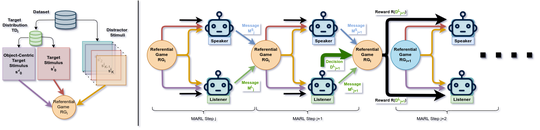
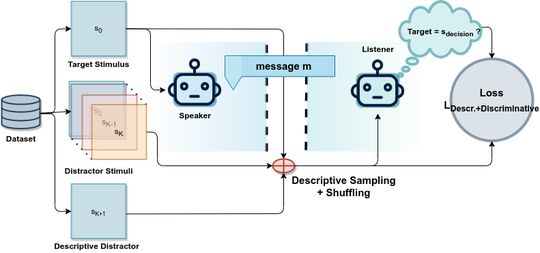
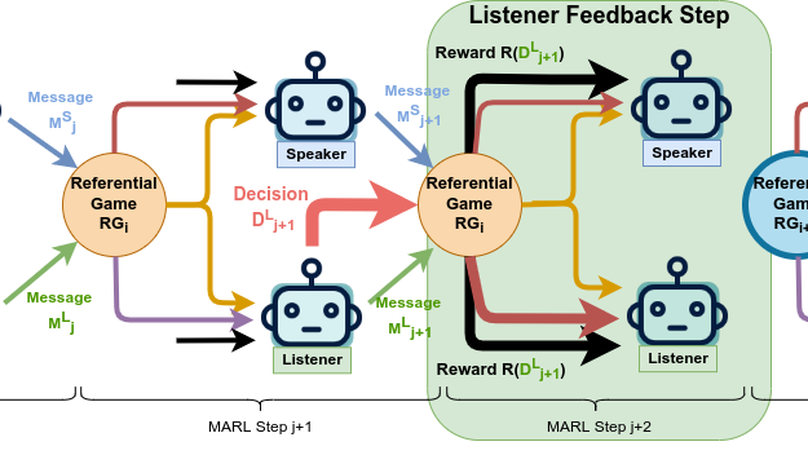
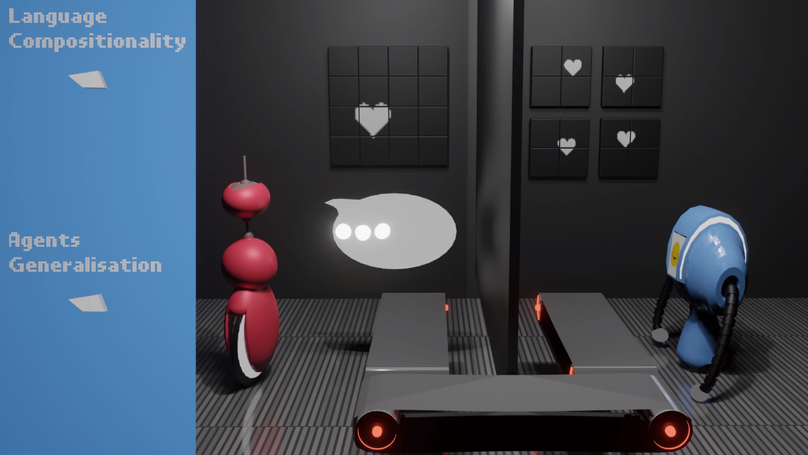
My research investigates the conditions under which AI systems acquire and deploy structured symbolic representations — beyond mere recombination of prelearned symbols — towards in-context grounding of novel atomic symbols and their systematic recombination into unseen configurations. I formalised this capacity as Compositional Learning Behaviours (CLBs) — one of several Symbolic Behaviours that autonomous agents must exhibit to manipulate symbolic structures — operationalised them through the Symbolic Behaviour Benchmark (S2B) and the proposed Meta-Referential Game framework, and demonstrated empirically that CLB competency is a necessary but not sufficient condition for Olympiad-level formal mathematical verification (AI4Math @ ICML2026). This result traces a direct line from the compositional evaluation framework pioneered in Meta-Referential Games to the frontier of formal AI reasoning, establishing a structural diagnostic gap in the automated theorem proving literature.
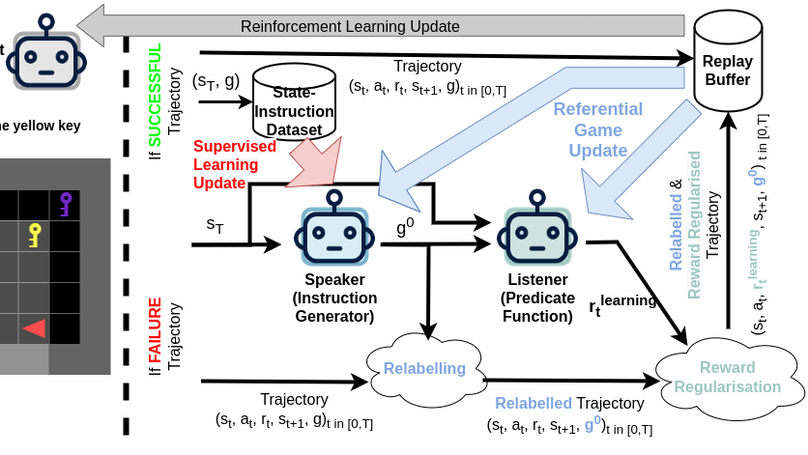
In parallel, I developed EReLELA, showing that emergent language abstractions can serve as structured exploration bonuses in sparse-reward RL, and the Differentiable Language Model (DLM) framework — a paradigm shift redefining Language Models as functions over sequences of probability distributions, enabling end-to-end differentiability for any frozen LM via Gumbel-Softmax gradient estimators.
The unifying aim across all these lines is to understand what must be true of AI systems for them to generalise reliably and co-operate efficiently with human beings — and to build the frameworks and tools that make that question answerable.
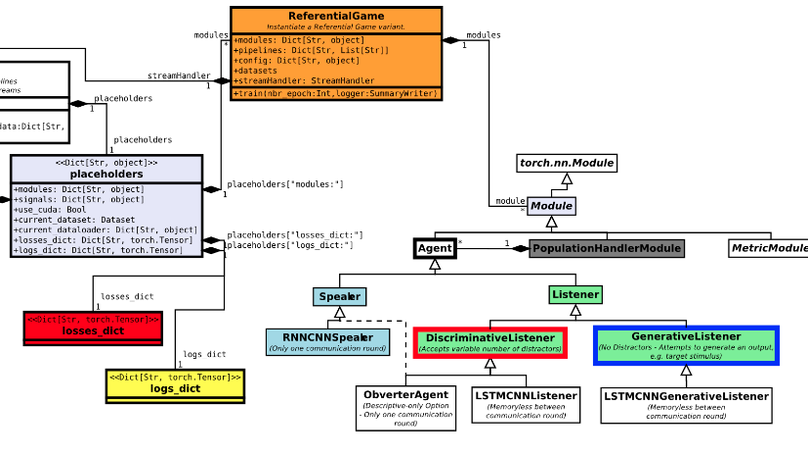
During my PhD at the University of York (IGGI CDT), advised by Dr James Alfred Walker and Dr Sondess Missaoui, I investigated language emergence and the systematicity of neural players in Referential Games, developing a nomenclature and Pytorch-based framework, entitled ReferentialGym, for the subfield’s deep learning resurgence.
Download my resumé.
- Compositional Generalisation
- Formal Mathematics
- Unsupervised Representation Learning
- Language Grounding
- Language Emergence (Emergent Communication)
- (Multi/Single-Agent) Deep Reinforcement Learning
- Imitation Learning
- Natural Language Processing (NLP)
- Generative & Agentic AI
- Physical Simulation
- Deep Learning
- Basketball
- Kendo
- Meditation
- Astronomy
IGGI PhD, 2026 (expected)
University of York
Master Recherche - Intelligence Artificielle et Robotique, 2017
Université de Cergy-Pontoise
Diplôme d'ingénieur - Informatique et Systèmes, 2017
Ecole National Supérieur de l'Électronique et de ses Applications
MEng in Electrical Engineering and Information Science, 2017
Osaka Prefecture University
News
Featured Publications
Projects